

Pest Control and Identification
Accurate identification is the first step in an effective pest management program. The more you know about the pest and the factors which influence its development and spread, the easier, more cost effective, and more successful your pest control will be. Our goals at Barnes Pest Control is the prevention, suppression, and eradication of your residential, business, and lawn pests! If you discover any of these pests and need help, give Barnes Pest Control a call and we will Get ‘Em Gone, Belly Up!
Residential & Commercial Pests


Damaging and Harmful Lawn Pests

Fire Ants
Fire ants vary in size, ranging from 1/16 to 1/4 inches in length and are yellow to red-brown in color. Fire ants are the most common insect pests of home lawns and occur in practically every lawn in Mississippi. When you do manage to get control of fire ants in your yard, newly swarmed fire ant queens will quickly recolonize it. New fire ant colonies thrive in areas that are free of competing colonies. Large colonies can severely injure crops, lawns, young birds, and people. Barnes Pest Control can provide treatments to maintain a lawn that is relatively free of fire ants.

Armyworm
Fall armyworms has four life cycles: egg, larva, pupa, and adult. Development from eggs to full grown larvae often takes 2-3 weeks, then the larva will burrow into the soil to pupate and emerge as adults 10-14 days later. Adult moths are gray in color with a 1 1/2 inch wingspan, white underwings, and forewings which are mottled with spots of white. The armyworm caterpillars are 1 1/2 inches in length, range in color from dark brown to gray or black, green or yellow-green, have an inverted Y between the eyes, and 3 stripes running the length of the body. The moths migrate at night in large numbers, where they will mate and then lay eggs in turf and pasture grasses, as well as field crops. Newly hatched larvae eat small amounts of leaf material causing the early lawn damage to be overlooked. During the last few days of their larval stage, they will consume over 93% of total foliage and can quickly destroy a yard. They will feed throughout the day but are most active early morning and late evening. Bermuda lawn grass is especially susceptible to armyworms.
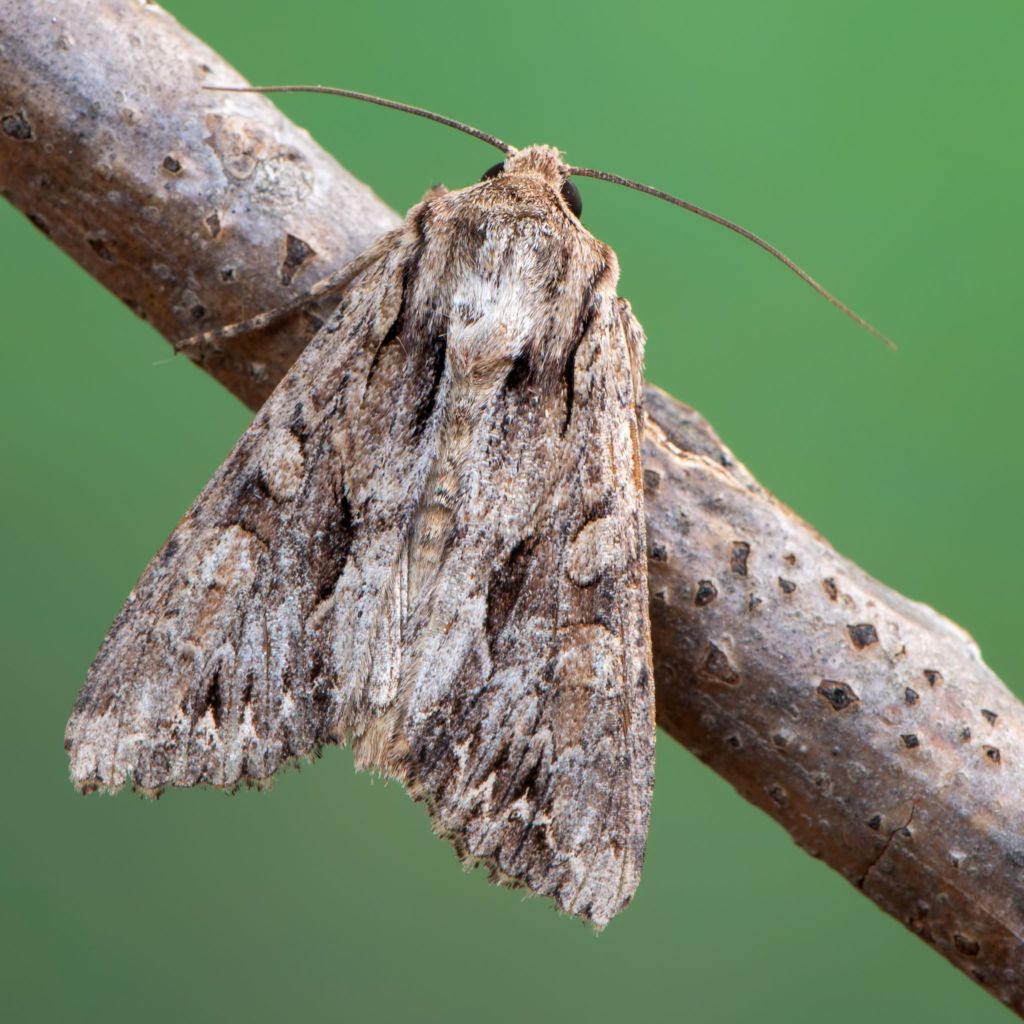
Armyworm Moth
Fall armyworm has four life cycles: egg, larva, pupa, and adult. Development from eggs to full grown larvae often takes 2-3 weeks, then the larva will burrow into the soil to pupate and emerge as adults 10-14 days later. Adult moths are gray in color with a 1 1/2 inch wingspan, white underwings, and forewings which are mottled with spots of white. The moths migrate at night in large numbers, where they will mate and then lay eggs in turf and pasture grasses, as well as field crops. Moths do not damage lawns.

Sod Webworm
Sod webworm larvae (caterpillars) are gray to tan with small dark spots on the body, brown heads, and are 3/4 to 1 inches in length when fully grown. Sod webworms overwinter as partially grown larvae in silk-lined tunnels in the thatch and soil with larval activity resuming in April or early May. Webworms complete development, pupate and emerge as adults from mid-May to mid-June. The larvae feed at night, cutting grass blades above the thatch line and pulling them into their tunnels to eat. The first sign of infestation is small, ragged brown spots with a grazed or scalped appearance. Under heavy sod webworm pressure, large areas can be defoliated and even killed during periods of summer heat and drought. While sod webworms are active from early spring through fall, the most serious turf grass injury occurs in mid to late summer.
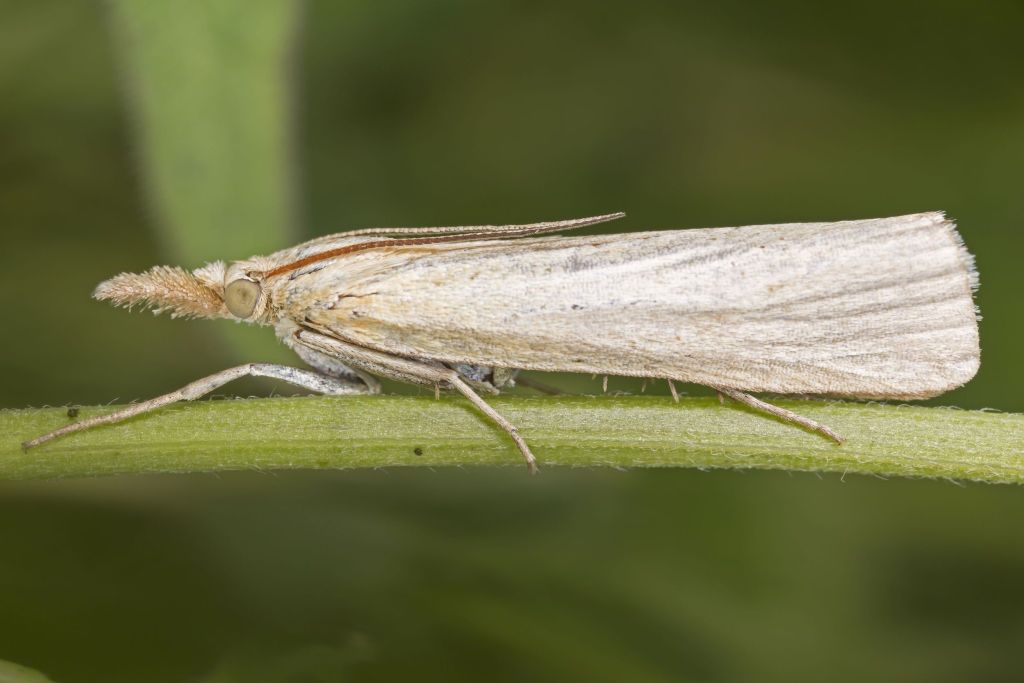
Sod Webworm Moth
The adult webworm moths are buff-colored, 1/2 to 3/4 inches long with snout-like projections extending forward from the head. They fold their wings around the body while at rest, giving them a cylindrical appearance. Adult sod webworms (moths) rest in the turf and on shrubbery during the day and randomly scatter their eggs into the grass in the late afternoon and early evening while flying in a zigzag fashion just above the turf surface. Eggs hatch in about one week, and first-generation larvae feed until mid-summer. A second and partial third generation occurs during the remainder of the season.

Black Cutworm
The black cutworm larvae (caterpillar) range in color from light gray, gray-brown to black with a pale stripe down the back, and are 1/8 to 2 inches in length. Black cutworm larvae feed on the stems and leaves of grass and plants, often cutting them off near the soil line. Their feeding makes small, irregular areas in the turf. They are nocturnal and hide in the day but may become active on cloudy days.

Black Cutworm Moth
Black cutworm moths are generally gray to brown with a wingspan of about 1 1/2 inches. The forewing is dark brown to black with a lighter distal edge. The wings have a small black dagger or dart-shaped mark that extends outward from a kidney shaped spot near the dark edge of the forewing. Adult moths begin to appear in March and may produce four generations per year. Moths are active at night and can lay 1,000 or more eggs in clusters on foliage. The entire life cycle from egg to adult takes 35 to 60 days depending on the temperature and food quality.
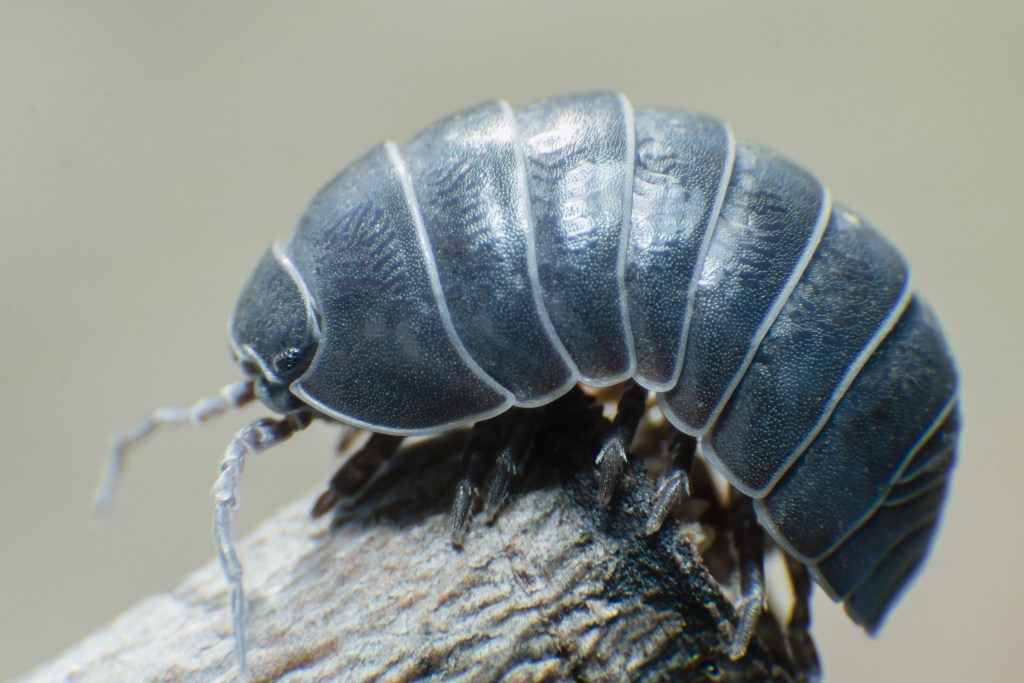
Pillbugs
Pillbugs are dark gray and 1/4 to 5/8 inches in length. Their oval, segmented bodies are humpbacked shaped above and flat or concaved underneath, seven pairs of legs and 2 sets of antennae with only one pair visible. Pillbugs can roll up into a tight ball when alarmed, in which they are sometimes called “roly-polies”. Pillbugs can be a nuisance around the home lawn when they occur in large numbers. They prefer moist, protected environments with large amounts of decaying organic matter. Heavy populations often occur in heavily mulched flower beds or areas with large amounts of leaf litter. Pillbugs can damage ornamental plants, such as hostas.
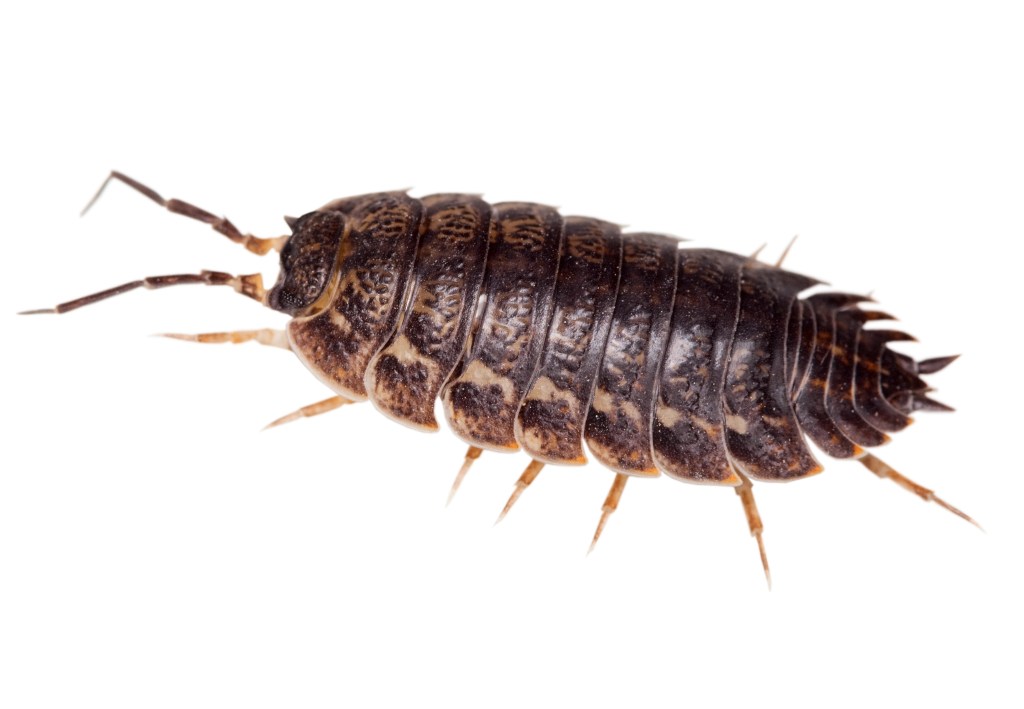
Sowbugs
Sowbugs are dark gray and 1/4 to 5/8 inches in length. Their oval, segmented bodies are humpbacked shaped above and flat or concaved underneath. They have seven pairs of legs and 2 sets of antennae with only one pair visible. Sowbugs have two tail-like appendages protruding from the posterior end of the body. Sowbugs can be a nuisance around the home lawn when they occur in large numbers. They prefer moist, protected environments with large amounts of decaying organic matter. Heavy populations often occur in heavily mulched flower beds or areas with large amounts of leaf litter. Sowbugs can damage ornamental plants, such as hostas.

Millipedes
Millipedes do not damage grass or ornamental plants, but can become a severe nuisance when present in high numbers. Millipedes prefer moist, protected, high organic matter environments, such as mulch or leaf litter. Millipedes can occur in high numbers following prolonged periods of heavy rainfall. Under these conditions, large numbers of migrating millipedes can accumulate on patios, carports, and other areas around the house. This situation commonly occurs around homes built in or near wooded areas where millipedes develop in leaf litter and then migrate into the lawn and home area. Millipedes usually die once they reach the patio, carport or inside the home because of the dry, exposed conditions in these areas.
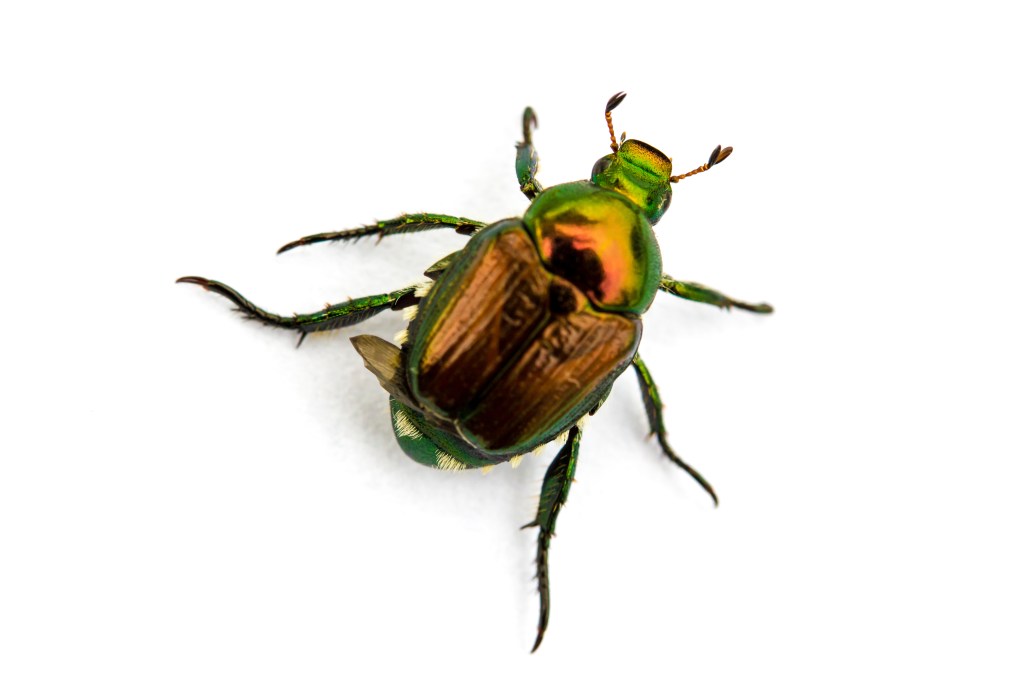
Japanese Beetle
Japanese beetles are oval in shape, shiny metallic green and about 1/2 inch in length. They have coppery-brown wing covers that rest on their backs. Along the edges of their backs are small patches of white hairs. Newly hatched larvae (white grubs) are about 1/8 inch in length with pale bodies and the mature grubs are up to one inch in length. Japanese beetles feed in groups and are highly destructive pests of turf grass, landscape plants, and crops. The adult beetles feed on the foliage and fruits of around three hundred different species of trees, shrubs, vines and crops. The adult beetles feed on leaf tissue between the veins, leaving a lacy skeleton and causing the trees and plants with extensive damage to turn brown and drop their leaves. The larvae feed on the roots of turf grass and other ornamentals. They reduce the ability of plants to take up enough water and nutrients to withstand hot, dry weather. Turf grass injury will look like patches of pale, dying grass. The beetles only have one generation per year. Adults emerge in late June or early July and can be found into September.
Stinging Insects


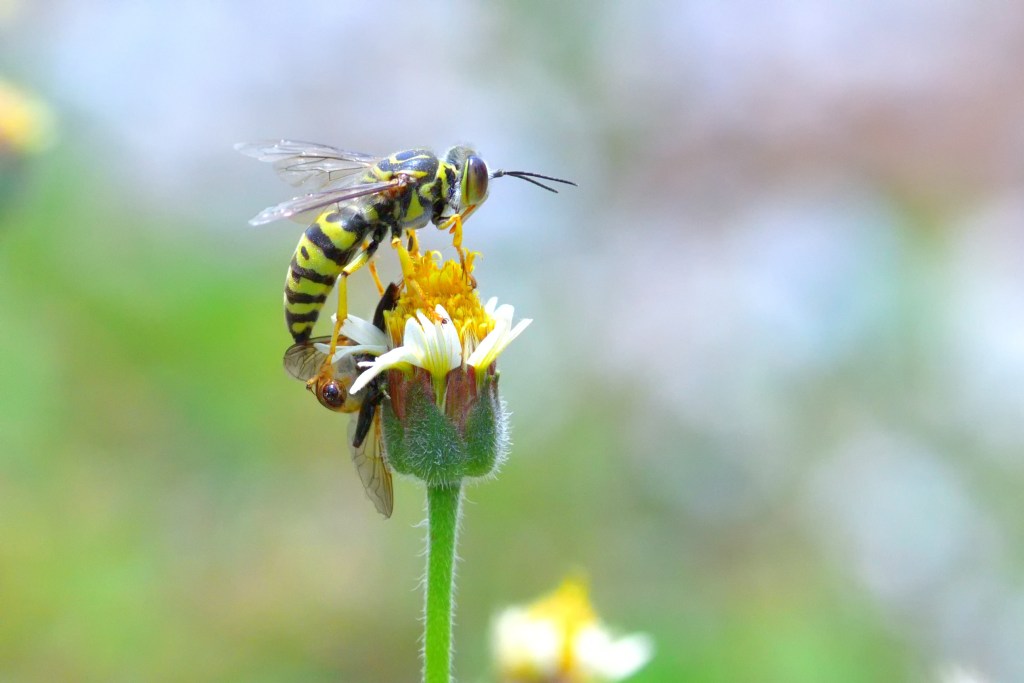
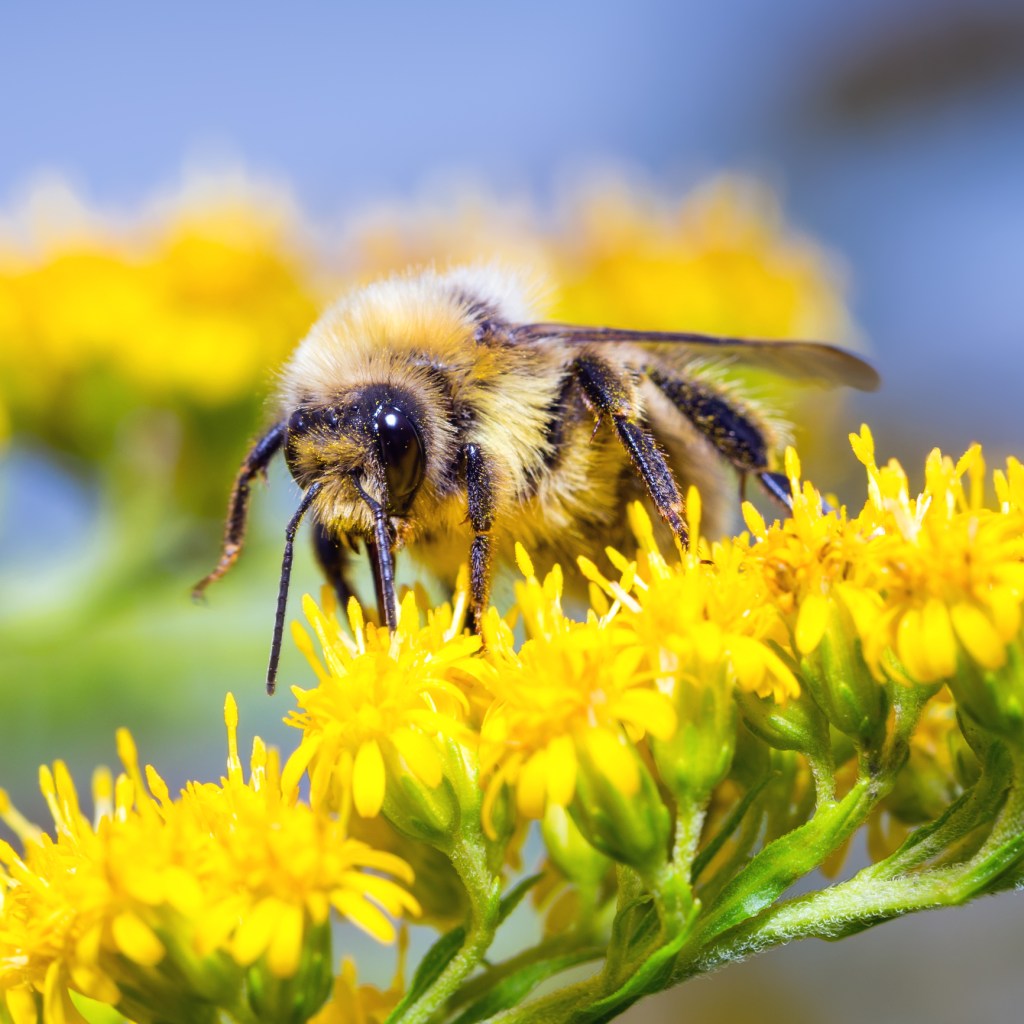
Stinging insects that nest in and around home lawns can be divided into two groups: solitary nesters and social nesters.
Carpenter bees and mud daubers are examples of solitary nesters. Solitary bees and wasps nest alone, usually in a hole in the ground, a hollow plant stem, thick shrubbery, grass or weeds, a hole in a building or machine, or in a mud nest they build. Solitary nesters are capable of stinging but rarely do because they are not aggressive and do not defend their nests.
Social bees and wasps nest in groups and, depending on the season and species, a nest contains anywhere from dozens to thousands of individual workers, and if disturbed, will aggressively defend their nest. Social nesters can be divided into two groups: aboveground nesters, such as red wasps, guinea wasps and hornets, and the ones who usually nest in the ground, like bumblebees, and yellowjackets. Although social nesters are rarely aggressive when by themselves away from their nest, they are very defensive of their nests, and most stings occur when someone unknowingly disturbs a nest.
All of these insects are beneficial in nature. Wasps, hornets and yellowjackets collect caterpillar larvae and other insects to feed to their developing larvae, and bumblebees provide pollination as they collect pollen and nectar. If these insects pose a direct stinging threat or the location of the nest interferes with work or daily activity, call Barnes Pest Control. We can take control of your stinging insects and make your yard a safer place.
Fleas and Ticks


Fleas spend the majority of time on their host. Eggs, which are usually laid when the host is at rest, fall from the host and accumulate in the bedding area. The flea larvae will feed on material which accumulates in the bedding area. After feeding for several weeks, the larvae will enter a nonfeeding pupal stage, and emerge as adults fleas, which will then hop onto a host to obtain the blood meals they require.
Several species of ticks may live in home lawns. The species we generally encounter are a three host tick, meaning they require three different and successively larger host animals in order to complete their life cycle. Female ticks will lay several hundred to more than a thousand eggs on the ground. The eggs will hatch into a six-legged larvae, which will attach to a suitable host to obtain its first blood meal. Once it becomes fully engorged it will drop from the host and molt into an eight-legged nymph. The nymph will repeat the same process and once fully engorged on the new host, will drop to the ground and molt into the adult stage. The process repeats again with the adult ticks finding a suitable host in which they will mate and take their final blood meal. The females will drop to the ground, lays eggs and the cycle starts again.
Occasionally a high number of fleas or ticks will infest a lawn due to a flea or tick infested pet, stray pet, or wild animals, such as rabbits, squirrels, opossums, skunks, racoons, ground nesting birds, mice, and rats, visit your lawn often. To get control of fleas and ticks in home lawns, limit access of wild animals and stray pets, if possible, to the lawn area, keep vegetation cut low, and if pets roam through wooded areas near your home, consult your local veterinarian about treatments to control fleas and ticks on your pets. When treating your lawn for infestations, include treatment of resting area of animals if around the home. Resting areas may not be the lawn but other areas nearby such as under porches, under shrubs, under crawl spaces of homes, in garages, sheds and other protected areas.
Fleas and ticks have the potential to transmit serious diseases. Barnes Pest Control can take control of any flea or tick problem and make your yard a safer place.

Romans 6:23 KJV
“For the wages of sin is death; but the gift of God is eternal life through Jesus Christ our Lord.”